
The first time I ran “for fun” was to humor my husband who had just landed a job with a running company of sorts. He was new to the sport as well, buzzing with enthusiasm, and eager to share the joy. With the best of intentions, he mapped a route to introduce me to the endorphin-rushing world of running. Unfortunately, the route had everything working against it: it was too long, the day was blistering hot, and at one point, we found ourselves running along the shoulder of a highway. As I huffed and puffed through car fumes, my eyes welled with tears, and my internal dialogue whispered, “You are absolutely not cut out for this”. And yet—somehow—I found refuge from expat stress in half marathons. It all began in Japan.
In 2009, my former co-worker in America had been diagnosed with breast cancer. Living overseas, I felt helpless, cut off from the support and connectivity we take for granted today. In an attempt to show solidarity, I signed up for Tokyo’s Run for a Cure that October, joining about 1,000 other runners. The event was delightfully informal; we started whenever we wanted, there was no countdown, no timing chips, and no bibs. It was pure fun and fundraising, which suited me just fine. Plus, I won a free mammogram! Granted, my Japanese language instructor had to translate the results that came via mail, making for an awkward turned giddy with relief exchange when the results were negative.
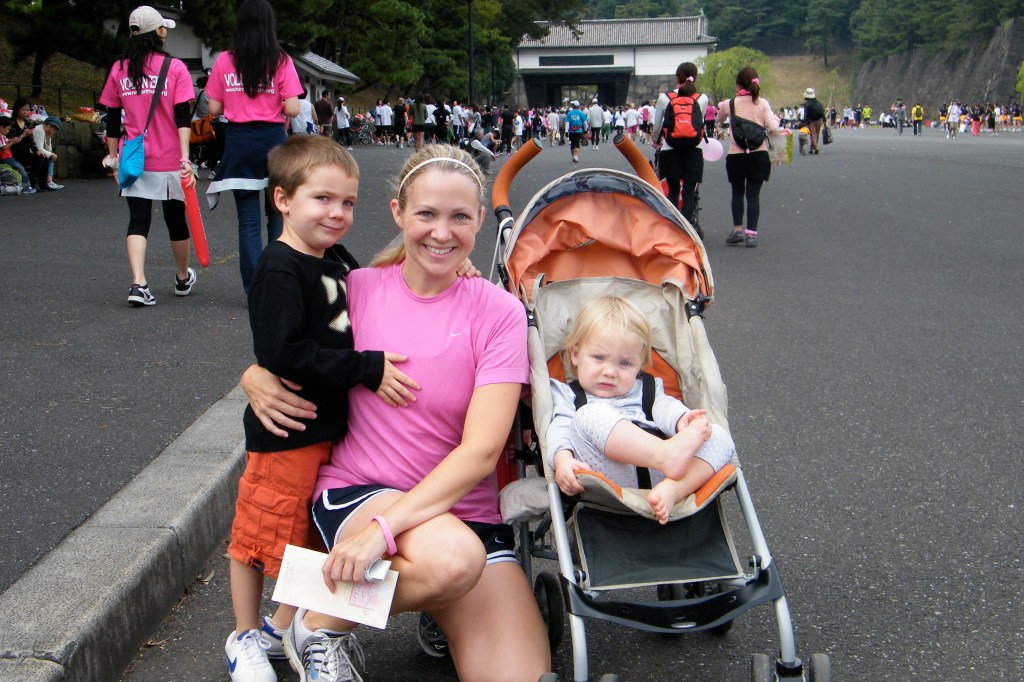
A few years later, my running distances stretched a little longer. My first half marathon back in the U.S. was an ordeal—I swore I’d never put myself through that again. But when another opportunity popped up, stubbornness took hold. I refused to let one bad race sour the whole experience. I overhauled my training, felt like an imposter by joining a running group, and signed up with a coach specifically for half marathons. When I crossed that finish line this time, I had energy left in the tank and a smile plastered on my face. Something had shifted. A fire had been lit.
Our next adventure took our family to China, where the running culture was surprisingly next-level. My husband and I signed up for a race with 30,000 registrants—yes, you read that right! The usual pre-race excitement was amplified to near riot-levels! To make things even more chaotic, all 30,000 runners lined up at the start without any pacing separation. The gun went off, and it was a full-contact event for the first few miles as we jostled, elbowed, and zigzagged our way into open space. And yet, despite the mayhem, we were hooked. The sheer fervor of it all—the energy, the madness—it called to me. I was a glutton for the glorious madness.
I don’t consider myself a “real” runner, yet my experience say otherwise. My mindset wasn’t Olympic-level determination, rather knowing I had training when I woke was enough purpose to keep me from slipping into a funk. In earlier moves, I struggled with the transition from a driven working mom to a trailing spouse feeling a bit … lost. Training helped prioritize my physical and mental well-being. Having a race on the calendar held me accountable, especially when so much of my energy went into keeping family transitions smooth. The joy became contagious. Enter Beth, another once-upon-a-time working mom turned trailing spouse, who also had a thing for running. She unlocked a whole new level of adventure.
Beth, my running sidekick, signed us up for a local half marathon in Shanghai and then another in Hong Kong. The travel was exhilarating, and the momentum kept building. Where else could running take us? Then, we stumbled upon adventure races—the Great Wall of China Half, the Angkor Wat International Half—events that transformed my view of running forever.
Adventure races are part vacation. We often traveled without our children, free to indulge in the rare luxury of single-minded focus. What should we eat the night before? What was our heart rate? The attention to detail felt extravagant, especially in a remote location where just finding the start line could be an adventure in itself.
These races also provided VIP sightseeing experiences. Sure, you can visit Angkor Wat as a tourist, but wouldn’t you rather enter at dawn, watching the sky turn deep orange as the brutal sun rises over the temple? By the time we crossed the finish line, the park was opening for the public and the magic dissolved into the usual tourist buzz. We had experienced something rare, something peaceful. Covering 13.1 miles allowed us to traverse hidden temples most tourists bypass. Instead of tacky souvenirs, we collected moments—like the image of a young monk cloaked in burgundy and yellow, stepping out of a temple to curiously watch the runners pass by.
Beth and I became obsessed, researching more adventure runs. The shared exeperience forged an unshakable friendship forged in the unknown. I had completed hometown half marathons before, but something had been missing. Having a running partner meant built in encouragement, but was especially invaluable when navigating foreign races with their unpredictability. Is a rickshaw truly the best way to get to packet pickup? Apparently, yes! Let’s go!
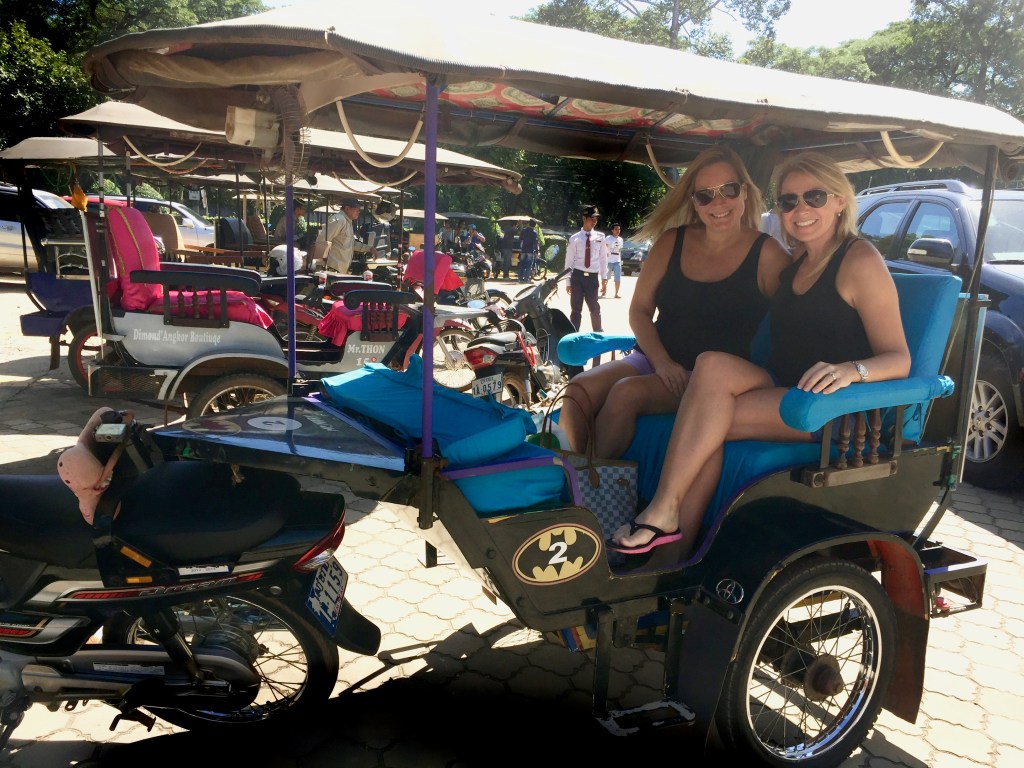
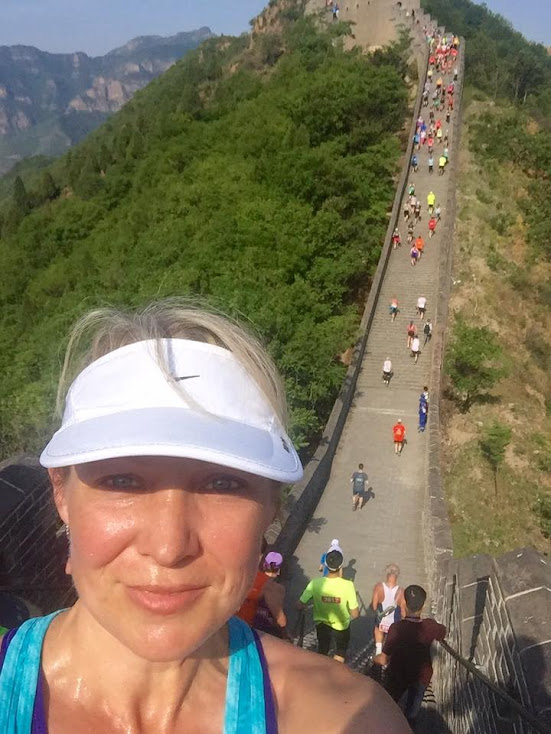
Each adventure race required its own strategy. The Great Wall of China Half demanded hill training—an issue when we lived in pancake-flat Shanghai. Solution? Running the stairwells of high-rises, much to the residents’ amusement (and confusion). Surprises were inevitable. The Angkor Wat race turned out to be mostly on dirt—something we only discovered en route. Adapting on the fly was half the fun! Every race brought unique quirks and challenges.
Like travel, running races opened windows into cultures. I want to taste the spices, smell the markets, and see what the locals cherish. The Angkor Wat race was tied to a charity supporting amputees, many of whom participated. It was an eye-opening reminder that Cambodia remains one of the most landmine-affected countries in the world. Seeing an organization funding prosthetics and surgical aid was profoundly moving.
Returning home meant finding races that matched our adventure runs’ thrill. Nothing quite compared. COVID and an injury put racing on hold for a few years. But Beth and I reunited in Alabama for a race last year and are planning another in Rhode Island next month. These are states I’ve never visited, and putting a race on the calendar reminds me to keep exploring, to keep moving forward.
Running has taken me places I never imagined, both literally and figuratively. It started as an obligation, evolved into a challenge, and transformed into a passport to adventure. I may never be the fastest or the strongest, but that has never been the point. The thrill is in the journey, the unexpected detours, and the friendships formed along the way. So, here’s my advice: push that registration button. Chase the challenge. Lean into the unknown. After all, the best stories are the ones you never saw coming. What is your unrealized story?
 Pacific Tales